Subscribe to Our Newsletter

  • Skip to primary navigation
  • Skip to main content
  • Skip to footer
The College for Behavioral Health Leadership

The College for Behavioral Health Leadership

Where behavioral health leaders collaborate to grow and transform communities across the nation.

  • About
    • Vision, Mission, Principles
    • Who We Are
    • What We Offer
    • Board of Directors
    • Staff
    • Thank you to our Sponsors!
    • Contact
  • Programming
    • All Webinars & Events
    • Workforce Solutions Jam
    • Equity-Grounded Leadership
      • Equity-Grounded Leadership Fellow Program
        • Funding Partners
        • Past EGL Cohorts
      • Equity-Grounded Leadership Executive Coaching Program
      • Characteristics of Equity-Grounded Leaders
        • The Principles of Change
  • Resources
    • Webinar Archive
    • Summit Archive
    • Healthy Behavior Change E-Guide
    • Journal Articles, Reports & Toolkits
    • Links
      • Health Equity and Anti-Racism
  • Membership
    • Why Join CBHL?
    • Membership Options
      • CBHL Membership Scholarship Fund
      • Give the Gift of a CBHL Membership
    • Organizational Members
    • Glue Up Member Community
  • News
  • Donate
    • CBHL Membership Scholarship Fund
    • Thank You to Our Donors

Search The College for Behavioral Health Leadership

Resources

Trauma and Suicide Prevention During Catastrophic Events

September 21, 2021 by Holly Salazar

New online modules focus on an equitable approach and rapid strategy development

Suicide is preventable. Unfortunately, over the past 16 months, younger adults, people of color, essential workers, and unpaid caregivers have reported increased thoughts of suicide. Emerging data shows a spike in suicide rates among Black Americans in certain locales and increased emergency department visits for suspected suicide attempts among young people. These and other populations are of growing concern as communities identify those at elevated risk of suicide and endeavor to counteract social isolation, financial stress, racism, and community trauma.

To support communities in planning a comprehensive, multi-sector response to these crises, Prevention Institute partnered with the Center for Law and Social Policy (CLASP) to develop a prevention toolkit.

The toolkit shares strategies for preventing suicide and trauma during catastrophic events like the COVID-19 pandemic, hurricanes, storms, or other disasters. It also includes online-learning modules; suicide-prevention planning interviews with agency leaders in Colorado and Santa Clara County, CA; a new social media video about Building Healing Communities; and an activity booklet that brings together concepts from Modules 1 through 4. 

The newest modules support communities to

  • Understand recent national trends and use interactive tools to identify local communities at elevated risk for suicide.
  • Explore promising interventions addressing the unique needs of communities at high-risk.
  • Understand how the CDC’s technical package and other tools and frameworks can support suicide-prevention efforts.
  • Rapidly assess local fit and feasibility of best available evidence from CDC’s technical package during catastrophic events and beyond.

The toolkit also includes multimedia resources on social connection and trauma-informed systems.

On social connection
 
Rates of social isolation are soaring around the world, with profound impacts on health and wellbeing. As the world heals, how can we weave stronger connections among families, neighborhoods, and communities? We need community-led solutions focused on local talents and assets and rooted in community cultures and values. PI’s most recent short video, based on Healthy Places by Design’s Socially Connected Communities: Solutions for Social Isolation, shows how communities can improve social connection.

Watch the video and share it with your networks and on Facebook, Twitter, Instagram, and LinkedIn. If you want to talk health, you have to talk connection.

For more on the link between social connection and preventing suicide and Adverse Childhood Experiences, including examples of how organizations have fostered connection during the pandemic, check out Strengthening social connections to prevent suicide and adverse childhood experiences (ACEs): Actions and opportunities during the COVID-19 pandemic.

On systems change
 
By integrating trauma-informed practices to change public systems, local government agencies are addressing the needs of the community and essential workers in ways that can last beyond the pandemic. Check out PI’s latest brief, Prioritizing equity and community wellbeing in the wake of catastrophic events, to read about examples in Baltimore, Tarpon Springs, Houston, and San Francisco. 

Prevention Institute’s multimedia resources focus on preventing trauma and suicide during catastrophic events, and include webinar recordings and other materials on supporting youth, addressing social isolation, advancing healing-centered systems, and prioritizing equity in COVID-19 recovery.

This work is funded by the Centers for Disease Control and Prevention. The toolkit is supported by Cooperative Agreement No. 6 NU38OT000305-02-03 from the Centers for Disease Control and Prevention (CDC). Its contents are solely the responsibility of the authors and do not necessarily represent the official views of the Department of Health and Human Services, or the CDC.

*Photo credit CC by sdttds
National Guidelines for Behavioral Health Crisis Care – A Best Practice Toolkit

August 30, 2021 by Holly Salazar

The National Guidelines for Crisis Care – A Best Practice Toolkit advances national guidelines in
crisis care within a toolkit that supports program design, development, implementation and
continuous quality improvement efforts. It is intended to help mental health authorities, agency
administrators, service providers, state and local leaders think through and develop the structure
of crisis systems that meet community needs. This toolkit includes distinct sections for:

  • Defining national guidelines in crisis care;
  • Tips for implementing care that aligns with national guidelines; and
  • Tools to evaluate alignment of systems to national guidelines.

In preparing this information, we could think of no one better to advise you than people who
have worked successfully with crisis systems of care. Therefore, we based the information in this
toolkit on the experience of veteran crisis system leaders and administrators as well as the
individuals and families who have relied on these supports on their worst days. The interviews in
this report’s addendum showcase the diversity and richness of this expertise and experience.

Follow-Up Discussion | Crisis Response: Peer Leadership to Develop Community Solutions

July 27, 2021 by Holly Salazar

Discussion Description: Mental health and substance use disorder crisis response and prevention are critical elements to helping people stabilize and enter a path to recovery and wellbeing.  There are proven opportunities to improve outcomes in crisis settings via the use of peers, including reduced trauma, increased trust, and reductions in recidivism.   

On Wednesday June 30, panelists shared best practice examples of peer-led crisis response and prevention via an excellent webinar, found here: Crisis Response – Peer Leadership to Develop Community Solutions. Participants asked for a follow up discussion to dive deeper into your questions, including topics related to financing, bringing models to scale, training and more! Join us for a 60-minute dialogue to address these important topics by registering below.

Resources:

  • Links to Presenter Organizations:
    • Baltic Street AEH Inc.
    • People USA
    • RI International
    • New York Association for Psychiatric Rehabilitation Services (NYAPRS)
  • Links from Chat:
    • Consumer-Operated Services Evidence-Based Practices (EBP) KIT
    • Can We Measure Recovery? A Compendium of Recovery and Recovery-Related Instruments
    • Measuring the Promise: A Compendium of Recovery Measures Volume II
    • The Effectiveness of a Peer-Staffed Crisis Respite Program as an Alternative to Hospitalization
    • Right of everyone to the enjoyment of the highest attainable standard of physical and mental health

Speaker Information:

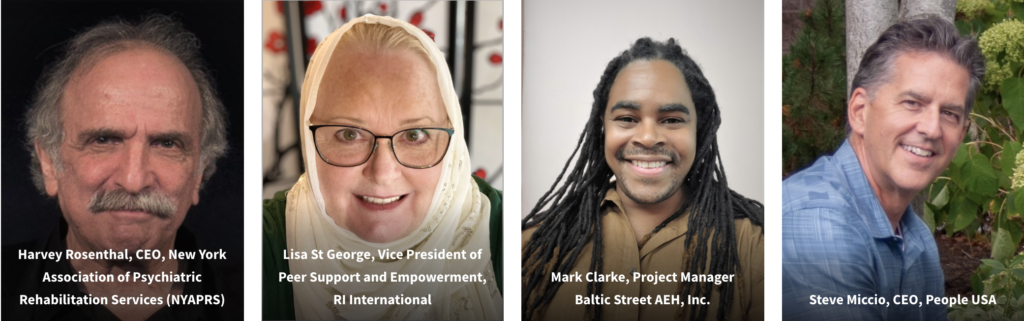
Mark Clarke is known to have  excellent problem solving skills and even greater interpersonal skills – drive to innovate is second nature. He has a love for technology that he is more than happy to leverage to the betterment of any projects he is assigned. Mark started working as a Peer Bridger in 2018 for Baltic and through hard work and an environment of growth provided by Baltic, he is the Project Manager for the Adult Home Initiative. Within the Adult Home Initiative, Mark has worked closely with his team to ensure that those involve in the Class Action Settlement of O’Toole vs Cuomo (NY state) have the opportunity to transition from their current Adult Home living, into the community of their choice. It has been Mark’s great pleasure to be able to work with such a dynamic team to implement policies and processes that will affect the lives of those who are disenfranchised, within the Adult Home or Assisted Living system. Mark has completed course work in the field of International Business Management out of Charles Sturt University in Sydney Australia in 2008-2010. That experience of the world and sharpening of his business acumen, has guided Mark’s work ethics. Mark is honored with the role he plays within Baltic Street and looks forward to growing with the organization as they seek to do the important work of community-based Peer services. Quote : “If one is lucky, a solitary fantasy can totally transform one million realities.” – Maya Angelou

Taina Laing, MSW, NYCPS has been employed at Baltic Street AEH, Inc. since 2002 and has been appointed as the new CEO as of September 2020. Recently, Taina has graduated from Stony Brook University with her MSW and is looking forward in pursuing her PhD in Mental Health. Taina sits on the NYAPRS Board of Directors and is currently the New York City Regional Coordinator for New York City, Peer Certification Board, and the MHA National Certified Peer Specialist. She brings over 19 years of peer supervision, advocacy, and vocational services to those with lived experience. Taina has a passion for service and advocacy that addresses equality and service disparities in low socioeconomic communities. She believes in the power of peer specialists and the integration of peers in all areas of recovery and support. “Peer Specialist supports are an integral part of all social determinants of health! We cannot allow for social or health policies to be written without the inclusion of the peer perspective and insight.”

Steve Miccio is Chief Executive Officer of People USA. Inspired and driven by his personal lived experience, Steve has spent over two decades creating, providing, and promoting innovative crisis response services and systems-level improvements – across the United States and internationally – that raise the bar on customer service, person-centered communication, trauma-informed care, empathy, and positive expectations for people’s recovery & wellness outcomes. Steve’s unique models and approaches significantly reduce hospital utilization, incarceration rates, and overall healthcare spending. Steve’s professional highlights since joining People USA in 1999 include the following:

  • First in the United States to embed peers in a hospital psych. ER, blazing the way for a best and evidence-based practice standard today.
  • Created the Rose House model of peer-operated crisis respites / home-like alternatives to hospital psych. ERs & inpatient units; first peer-run hospital diversion houses in New York.
  • Helped open 39 peer-operated crisis respites using the Rose House model across the United States and Europe.
  • Developed OMH White Paper, “Infusing Recovery-Based Principles into Mental Health Services” with input from over 40,000 New Yorkers.
  • Created the Dutchess County Stabilization Center; first peer-run crisis stabilization center in the world; first crisis stabilization center in the Northeastern United States.
  • Created the Transitional Care Wellness Team model, a unique hybrid of transitional care management and wellness coaching.
  • Created the Westchester Forensic Mobile Crisis & Response Team; first peer-run criminal justice-focused mobile team in the United States.
  • Engaged in community-wide systems transformation – across sectors – in multiple counties throughout New York’s Hudson Valley region.
  • Developed unique training programs – for hospitals, local government units, and behavioral health organizations across the U.S. – to help them build tomorrow’s behavioral health workforce and culture.
  • Organized and provided Crisis Intervention Team (CIT) trainings to hundreds of law enforcement throughout New York.

Steve is active with the following groups: Chair of the National Psychiatric Rehabilitation Association (PRA); Board member of CIT International; Subject matter expert for the Re-entry Policy Academy headed by the SAMHSA GAINS Center and Policy Research Associates; Member of the International Crisis Now coalition; Member of the Crisis Residential Association; Member of New York State Suicide Prevention Council; Board member of 2-1-1 policy board of Hudson Valley; Executive member of the Dutchess County Criminal Justice Council (DCCJC); Chair of the Diversion Committee (DCCJC); Member of the Dutchess County Police Reform and Modernization Collaborative; Advisory Board member of the Northeast Caribbean Mental Health Technology Transfer Center.

Steve lives in the Village of New Paltz, one of NY’s most vibrant college towns; he is originally from Fishkill, NY. He enjoys drumming, fishing, gardening, hiking, rocket building, and – most importantly – spending time with his family, including his two amazing daughters, and his partner Renee.

Lisa St George, MSW, CPRP, CPRSS brings over 40 years of experience in the health and human services industry. She is a seasoned executive leader and currently serves as the Vice President of Peer Support and Empowerment at RI International. Her work with RI has spanned 20 years, during which time she has provided executive leadership and program development of RI International’s peer support workforce and programs in Arizona, California, and New Zealand. She is a principle author of RI International’s Peer Employment Training which, as of February 2021, has trained 14,560 peer support workers nationally and internationally. In addition, she has written over 100 training tools, articles, publications, and presentations that have focused on peer support, recovery, inpatient psychiatry, and crisis services. Ms. St George has been recognized by her peers and has received the Mental Health Director’s Program of the Year (San Diego) and California Health Hero (Mental Health Association of CA) as well as the Elton George Armstrong Award. Recent publications include, The Emerging Field of Peer Support within Mental Health Services, within the Book Workforce Development Theory and Practice in the Mental Health Sector, (2017) IGI Publications, and Self-Advocacy and Empowerment, within the Handbook of Recovery in Inpatient Psychiatry (2016), and United States Psychiatric Rehabilitation Association, Workbook for Certification (2003). Ms St George also serves as a peer reviewer for several professional journals and believes in supporting the growth of knowledge in the field. Ms. St George served as Faculty Associate at Arizona State University and provided the Master’s Level Social Work Course, Mental Illness, Recovery and Social Justice. She has supported the mental health community in Phoenix, AZ by serving as Vice Chair of the Maricopa Human Rights Committee and as a member of the Arizona Behavioral Health Planning Counsel. Ms St George completed both her Bachelor of Social Work and her Masters of Social Work at Arizona State University. She was a board member of International Association of Peer Supporters for fifteen years and sat as Board Chair for three years. As an Advisory Board Member of Open Minds, Lisa supports organizations and systems in the development of peer support and recovery services as well as training and consultation in a variety of areas. Ms St George, worked in childhood oncology and child protective services, where she researched and developed a care protocol for crack addicted infants for the State of Arizona Child Protective Services before joining RI International. Lisa also serves vulnerable communities and especially refugees within her community through education, support, and guidance. Ms St George believes in the resiliency of the human spirit, and in the inherent strength of people with trauma, mental health, and addiction challenges.

Harvey Rosenthal serves as the CEO of the New York Association of Psychiatric Rehabilitation Services (NYAPRS), a peer-provider partnership that has been a leading state and national change agent over the past 25 years.  Harvey has over 44 years of experience working to promote public mental health policies and practices that advance the recovery, rehabilitation, rights, dignity and full community inclusion of individuals with mental health and/or trauma related challenges.  Harvey has helped to create several nationally acclaimed and replicated peer support and transformational training innovations.  He has also worked to fight stigma, discrimination, and human rights violations and to advance informed choice protections, self-directed care and cultural competence. Harvey is a recipient of CBHL’s Timothy J. Coakley Award for Behavioral Health Leadership. His interest in his work is personal, beginning with a psychiatric hospitalization at age 19.

The high cost of unchecked bias in the health system

July 20, 2021 by Holly Salazar

CFOs are building the financial framework for achieving health equity.

Crisis Response: Peer Leadership to Develop Community Solutions

June 30, 2021 by Holly Salazar

Description:

Mental health and substance use disorder crisis response and prevention are critical elements to helping people stabilize and enter a path to recovery and wellbeing.  There are proven opportunities to improve outcomes in crisis settings via the use of peers, including reduced trauma, increased trust, and reductions in recidivism.  In this webinar, panelists will share best practice examples of peer-led crisis response and prevention. Panelists will also discuss opportunities to engage and promote peers into leadership positions to develop community solutions to community behavioral health challenges.  

Resources:

  • Presentation Slides
  • Links to Presenter Organizations:
    • New York Association for Psychiatric Rehabilitation Services (NYAPRS)
    • People USA
    • Baltic Street AEH Inc.
    • RI International

Speaker Information:

Harvey Rosenthal serves as the CEO of the New York Association of Psychiatric Rehabilitation Services (NYAPRS), a peer-provider partnership that has been a leading state and national change agent over the past 25 years.  Harvey has over 44 years of experience working to promote public mental health policies and practices that advance the recovery, rehabilitation, rights, dignity and full community inclusion of individuals with mental health and/or trauma related challenges.  Harvey has helped to create several nationally acclaimed and replicated peer support and transformational training innovations.  He has also worked to fight stigma, discrimination, and human rights violations and to advance informed choice protections, self-directed care and cultural competence. Harvey is a recipient of CBHL’s Timothy J. Coakley Award for Behavioral Health Leadership. His interest in his work is personal, beginning with a psychiatric hospitalization at age 19.

Lisa St George, MSW, CPRP, CPRSS brings over 40 years of experience in the health and human services industry. She is a seasoned executive leader and currently serves as the Vice President of Peer Support and Empowerment at RI International. Her work with RI has spanned 20 years, during which time she has provided executive leadership and program development of RI International’s peer support workforce and programs in Arizona, California, and New Zealand. She is a principle author of RI International’s Peer Employment Training which, as of February 2021, has trained 14,560 peer support workers nationally and internationally. In addition, she has written over 100 training tools, articles, publications, and presentations that have focused on peer support, recovery, inpatient psychiatry, and crisis services. Ms. St George has been recognized by her peers and has received the Mental Health Director’s Program of the Year (San Diego) and California Health Hero (Mental Health Association of CA) as well as the Elton George Armstrong Award. Recent publications include, The Emerging Field of Peer Support within Mental Health Services, within the Book Workforce Development Theory and Practice in the Mental Health Sector, (2017) IGI Publications, and Self-Advocacy and Empowerment, within the Handbook of Recovery in Inpatient Psychiatry (2016), and United States Psychiatric Rehabilitation Association, Workbook for Certification (2003). Ms St George also serves as a peer reviewer for several professional journals and believes in supporting the growth of knowledge in the field. Ms. St George served as Faculty Associate at Arizona State University and provided the Master’s Level Social Work Course, Mental Illness, Recovery and Social Justice. She has supported the mental health community in Phoenix, AZ by serving as Vice Chair of the Maricopa Human Rights Committee and as a member of the Arizona Behavioral Health Planning Counsel. Ms St George completed both her Bachelor of Social Work and her Masters of Social Work at Arizona State University. She was a board member of International Association of Peer Supporters for fifteen years and sat as Board Chair for three years. As an Advisory Board Member of Open Minds, Lisa supports organizations and systems in the development of peer support and recovery services as well as training and consultation in a variety of areas. Ms St George, worked in childhood oncology and child protective services, where she researched and developed a care protocol for crack addicted infants for the State of Arizona Child Protective Services before joining RI International. Lisa also serves vulnerable communities and especially refugees within her community through education, support, and guidance. Ms St George believes in the resiliency of the human spirit, and in the inherent strength of people with trauma, mental health, and addiction challenges.

Mark Clarke is known to have  excellent problem solving skills and even greater interpersonal skills – drive to innovate is second nature. He has a love for technology that he is more than happy to leverage to the betterment of any projects he is assigned. Mark started working as a Peer Bridger in 2018 for Baltic and through hard work and an environment of growth provided by Baltic, he is the Project Manager for the Adult Home Initiative.

Within the Adult Home Initiative, Mark has worked closely with his team to ensure that those involve in the Class Action Settlement of O’Toole vs Cuomo (NY state) have the opportunity to transition from their current Adult Home living, into the community of their choice. It has been Mark’s great pleasure to be able to work with such a dynamic team to implement policies and processes that will affect the lives of those who are disenfranchised, within the Adult Home or Assisted Living system.

Mark has completed course work in the field of International Business Management out of Charles Sturt University in Sydney Australia in 2008-2010. That experience of the world and sharpening of his business acumen, has guided Mark’s work ethics. Mark is honored with the role he plays within Baltic Street and looks forward to growing with the organization as they seek to do the important work of community-based Peer services.

Quote : “If one is lucky, a solitary fantasy can totally transform one million realities.” – Maya Angelou

Steve Miccio is Chief Executive Officer of People USA. Inspired and driven by his personal lived experience, Steve has spent over two decades creating, providing, and promoting innovative crisis response services and systems-level improvements – across the United States and internationally – that raise the bar on customer service, person-centered communication, trauma-informed care, empathy, and positive expectations for people’s recovery & wellness outcomes. Steve’s unique models and approaches significantly reduce hospital utilization, incarceration rates, and overall healthcare spending. Steve’s professional highlights since joining People USA in 1999 include the following:

  • First in the United States to embed peers in a hospital psych. ER, blazing the way for a best and evidence-based practice standard today.
  • Created the Rose House model of peer-operated crisis respites / home-like alternatives to hospital psych. ERs & inpatient units; first peer-run hospital diversion houses in New York.
  • Helped open 39 peer-operated crisis respites using the Rose House model across the United States and Europe.
  • Developed OMH White Paper, “Infusing Recovery-Based Principles into Mental Health Services” with input from over 40,000 New Yorkers.
  • Created the Dutchess County Stabilization Center; first peer-run crisis stabilization center in the world; first crisis stabilization center in the Northeastern United States.
  • Created the Transitional Care Wellness Team model, a unique hybrid of transitional care management and wellness coaching.
  • Created the Westchester Forensic Mobile Crisis & Response Team; first peer-run criminal justice-focused mobile team in the United States.
  • Engaged in community-wide systems transformation – across sectors – in multiple counties throughout New York’s Hudson Valley region.
  • Developed unique training programs – for hospitals, local government units, and behavioral health organizations across the U.S. – to help them build tomorrow’s behavioral health workforce and culture.
  • Organized and provided Crisis Intervention Team (CIT) trainings to hundreds of law enforcement throughout New York.

Steve is active with the following groups: Chair of the National Psychiatric Rehabilitation Association (PRA); Board member of CIT International; Subject matter expert for the Re-entry Policy Academy headed by the SAMHSA GAINS Center and Policy Research Associates; Member of the International Crisis Now coalition; Member of the Crisis Residential Association; Member of New York State Suicide Prevention Council; Board member of 2-1-1 policy board of Hudson Valley; Executive member of the Dutchess County Criminal Justice Council (DCCJC); Chair of the Diversion Committee (DCCJC); Member of the Dutchess County Police Reform and Modernization Collaborative; Advisory Board member of the Northeast Caribbean Mental Health Technology Transfer Center.

Steve lives in the Village of New Paltz, one of NY’s most vibrant college towns; he is originally from Fishkill, NY. He enjoys drumming, fishing, gardening, hiking, rocket building, and – most importantly – spending time with his family, including his two amazing daughters, and his partner Renee.

Inching Our Way Towards Value-Based Purchasing

May 11, 2021 by Holly Salazar

Offered in partnership with Health Management Associates (HMA).

Description

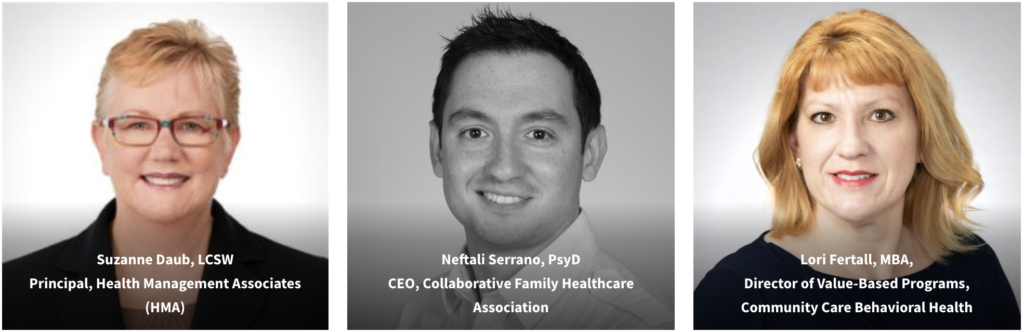
In this podcast style conversation, three behavioral health professionals will discuss emerging trends in value-based purchasing, specific VBP readiness milestones, and the strategies leaders can use to form fruitful relationships with payers and collaboratively invest in value. Neftali Serrano, PsyD, Chief Executive Officer of the Collaborative Family Healthcare Association will moderate a conversation with Suzanne Daub, LCSW, a principal consultant with Health Management Associates and Lori Fertall, MBA, Director of Value-Based Programs at Community Care Behavioral Health, a non-profit behavioral health managed care organization.

Resources:

  • Presentation Slides
  • Links:
    • Collaborative Family Healthcare Association – What is Integrated Care?
    • Health Management Associates – VBP Readiness Assessment Tool

Speaker Information

Suzanne Daub, LCSW, Principal Consultant – Health Management Associates (HMA)

Suzanne Daub is a leading expert and nationally recognized trainer in integrated healthcare who knows how to help clients design, scale and evaluate behavioral integration into primary care and wellness culture. She is an energetic coach who believes building quality integrated systems of care means committing deeply to the people who deliver the work and empowering service users. Suzanne is best known for her creative leadership, which inspires those who serve vulnerable populations to embrace responsibility for transforming the way healthcare is delivered. She is passionate about a “no wrong door” approach to integrated care and works across systems to ensure that individuals and families get whole-person, recovery-oriented services regardless of where they seek help.

Suzanne has more than 30 years of experience in direct patient care, program administration and managed care. For 18 years, she served as director of behavioral health at a multisite Federally Qualified Health Center (FQHC) in Philadelphia where she integrated care using the Behavioral Health Consultation (BHC) model. Suzanne co-founded the largest network of primary care behavioral health providers in the country and was recognized by the Pennsylvania Association of Community Health Centers with the Innovations Award.

As the extreme health disparities among people with serious mental illness came to light, Suzanne brought her integrated care skills to community mental health organizations across the country as a senior integrated care consultant for the National Council for Behavioral Health.

Immediately prior to joining HMA, she was the senior director of Integrated Care Initiatives for UPMC/Community Care Behavioral Health, Pennsylvania’s largest Medicaid Behavioral Health managed care organization. Suzanne led the scaling of behavioral health homes to 65 organizations serving adolescents, adults and individuals receiving opioid treatment.

Suzanne earned a Master of Social Work from Smith College School for Social Work and a postgraduate certification in marriage and family therapy. She has published in the area of integrated care workforce development. Suzanne serves on the Board of Directors for the Collaborative Family Healthcare Association and has an active clinical practice.

Her creativity and passion for bringing all the pieces together extends to her personal life where her work as a mosaic artist has been shown in galleries, and she is on the board of directors of the Philadelphia Society of Mosaic Artists.

Neftali Serrano, PsyD, Chief Executive Officer of the Collaborative Family Healthcare Association

Dr. Serrano is the Chief Executive Officer of the Collaborative Family Healthcare Association, a national not-for-profit organization dedicated to promoting integrated care as the standard of care for all. He has devoted the majority of his career to working with federally qualified health centers (FQHC), starting integrated care programs and consulting with clinics in underserved settings to assist with implementation of primary care behavioral health (PCBH) programs.

Dr. Serrano’s research interests include program development evaluations and outcome studies related to PCBH, particularly in underserved settings. In 2014 Dr. Serrano edited an e-book titled, “The Implementer’s Guide To Primary Care Behavioral Health,” a practice management handbook. One of Dr. Serrano’s most outstanding contributions to the field of psychology has been his passion to teach and train the future PCBH workforce. In 20 years of practice he has trained hundreds of students and professionals in the practice of Behavioral Health Consultation in primary care.

Dr. Serrano is the father of three children, Emma (16), Sophia (14), & Caleb (12) and the husband of Karen an Emergency Medicine physician. 

Lori Fertall, MBA, Director of Value-Based Programs at Community Care Behavioral Health

Lori Fertall is the Director of Value-Based Programs at Community Care Behavioral Health, a non-profit behavioral health managed care organization that is part of the Insurance Services Division of UPMC headquartered in Pittsburgh, Pennsylvania. In this position, she is responsible for the creation, implementation, and evaluation of value-based purchasing arrangements across the enterprise.

Previously, Lori served as Community Care’s Director of Quality Management for 11 years. In that role, she implemented quality management programs and performance improvement projects across the company and its provider networks. Prior to joining Community Care, Lori worked at various health and human service agencies.

Lori earned a Master’s Degree in Business Administration from Point Park University and a Bachelor’s Degree in Social Work and Women’s Studies from West Virginia University. She also earned a Lean Six-Sigma Green Belt from UPMC.

Building Community Leadership, Power, Influence and Partnerships to Improve Health and Well-Being Through a Resident Leadership Academy

April 30, 2021 by Holly Salazar

Description

Resident Leadership Academies (RLAs) are multi-week training programs for residents who want to learn how to improve their local communities. Training sessions focus on topics such as community leadership, social determinants of health, crime prevention and safety, land use and community planning, and healthy food systems. Residents learn skills and best practices to address the issues that most affect their communities, and they work alongside their neighbors to help improve quality of life where they live.  Representatives of Community Health Improvement Partners (CHIP) in partnership with the County of San Diego Health and Human Services Agency (HHSA), and RLA program graduates will share the story about program’s evolution and impacts over the past 11 years in San Diego County.

Resources

  • What is a Resident Leadership Academy?
  • What is Live Well San Diego?
  • Presentation Slides
  • Community Health Improvement Partners – Resident Leadership Academy Website
  • Live Well San Diego – Resident Leadership Academy Website

Speaker Info

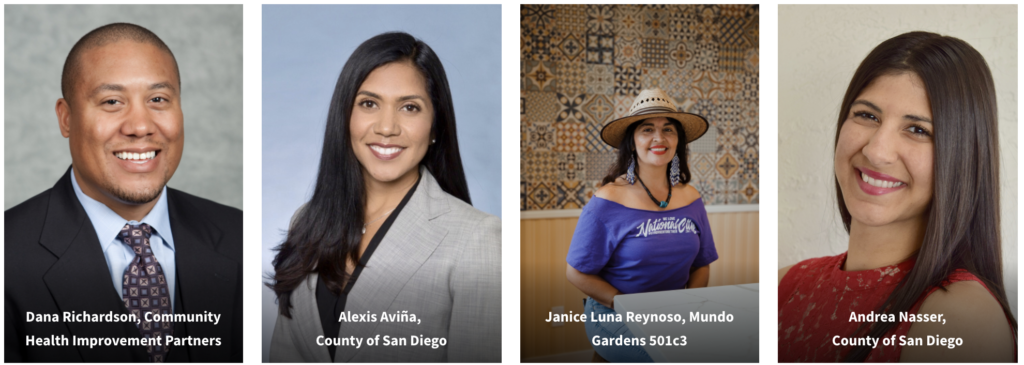
Dana Richardson, President & CEO, Community Health Improvement Partners (CHIP)

Dana Richardson is President & CEO at Community Health Improvement Partners (CHIP) – a 25-year, nonprofit organization that works to advance long term, sustainable solutions to priority health needs through collaboration, advocacy and community engagement.   Dana has worked with CHIP for 13 years, and previous Director of Government Affairs and Community Partnerships at Paradise Valley Hospital/Adventist Health. He has worked in community-based public health in San Diego County for 25 years, and has vast experience in community mobilization, hospital community benefit, prevention programming, public health systems change, policy advocacy for substance abuse and obesity prevention, and behavioral health.  Dana oversees the efforts of the San Diego County Suicide Prevention Council, the Independent Living Association (Recovery Housing) programs and is a Co-Founder of the Resident Leadership Academy program – a curriculum-based, public health leadership program, established in 2011.

Alexis Aviña, EdD, MPH, Manager – Live Well San Diego Support Team, County of San Diego Health & Human Services Agency (HHSA) – Office of Strategy and Innovation

With more than 17 years’ experience in public health promotion and disease prevention, Dr. Alexis Aviña found her way into public health after surviving young adult cancer. Her professional experiences have focused on improving access, quality, and equity to health for socioeconomically, ethnically, and geopolitically underserved populations through strategy and evaluation. The populations she is most passionate about serving are people of color, women, disabled — those who are voiceless and at the highest risk of negative outcomes. Dr. Aviña’s public health experiences span non-profit, research, teaching, hospital community and government settings. In her current role as the Live Well San Diego Manager, at the County of San Diego Health and Human Services Agency, Dr. Aviña is at the forefront of a social movement for wellness among 3.4M residents and anchored in local government. Dr. Aviña is also an adjunct professor at San Diego State University School of Public Health researching anti-poverty and inclusive strategies for well-being.

Janice Luna Reynoso, Executive Director, Mundo Gardens 501c3 / Resident Leadership Academy Facilitator 

Janice is a single mother of three artists, Zenona, Semilla, and JenMichel, who are amazing young women and leaders.  Her mother Yolanda Luna, the family’s biggest support system, is to credit for family roots in organizing and social justice. Over time, Janice’s experiences with having authentic and meaningful conversations with her community of Southeast San Diego, National City, and Logan Heights, has led her to a deeper understanding of the role we all play as the residents, artists, leaders, and business owners.  Janice serves as Founder/Executive Director of Mundo Gardens – a community garden and social justice organization that works on solutions to issues that impact the social determinants of health – the conditions under which we work, live, play, pray, and age. Janice is a certified trainer of the Resident Leadership Academy, Member of the County of San Diego’s Behavioral Health Advisory Board, and a graduate of the RISE San Diego Urban Leadership Fellows program.

Andrea Nasser, Administrative Analyst II, Youth Development and Community Support Services – County of San Diego Probation Department / Resident Leadership Academy Facilitator 

Andrea is a social impact-public health advocate passionate about working alongside residents in diverse and culturally rich communities, that have historically been underserved, to achieve health, educational and financial equity. She has over eight years of experience developing and implementing tailored community programs locally in San Diego and abroad.  Currently, she works in Probation’s Youth Development and Community Support Services Supervision Division and manages contracts for community-based services that provide youth with positive opportunities for success to prevent juvenile justice system involvement. As a Resident Leadership Academy graduate and facilitator, she co-led the Creative Arts Youth Resident Leadership Academy for 15 youth from throughout Southeast San Diego.

Protected: Courageous Leadership – Stepping Away from Power and Privilege to Build Community Trust

April 6, 2021 by Holly Salazar

This content is password-protected. To view it, please enter the password below.

Roadmap to the Ideal Crisis System

March 30, 2021 by Holly Salazar

There is broad recognition that behavioral health crises have reached epidemic proportion, with drug overdoses and suicides having overtaken traffic accidents as the two leading causes of death among young Americans ages 25-44. The COVID-19 pandemic has further underscored the dramatic need for behavioral health services, including crisis services. Yet very few communities in the United States have a behavioral health crisis system that would be considered excellent, let alone ideal.

In most American communities today, the behavioral health crisis system isn’t really a system at all, but a combination of services provided by law enforcement and hospital emergency rooms that are typically not designed to meet the needs of individuals in the midst of behavioral health crises. Often the only treatment options for individuals in behavioral health crises are in settings that do not adequately meet their needs despite being extremely costly, such as emergency rooms and inpatient psychiatric units. Further, lack of appropriate and accessible behavioral health crisis response too frequently results in law enforcement being the only available first responders, which may lead to an increase in unnecessary arrest and incarceration for people with acute behavioral health needs.

Thankfully, this situation is changing, as there is growing recognition that behavioral crisis needs special attention to ensure appropriate response for everyone, on par with that provided for medical crises, disaster response, fire response and public safety. Table 1 lists a series of reports over the past decade that describe various components of state-of-the art behavioral health crisis services. Among the most recent is a toolkit from the Substance Abuse and Mental Health Services Administration (SAMHSA) that proposes national guidelines for crisis services (SAMHSA, 2020). Another important driver has emerged from work on reducing inappropriate criminal justice involvement, recognizing the need for focus on “Intercept 0” (an effective community crisis system) in the Sequential Intercept Mapping process (Bonfine, 2019) so that law enforcement involvement in behavioral health crises is minimized. Even more important, federal legislation (National Suicide Prevention Hotline Improvement Act) has led to the initiation of implementation of a national suicide prevention and behavioral health crisis line number – 988 – that is intended to go live nationally by 2022. This major initiative provides an opportunity for the creation of high-quality community crisis response systems that approximate the level of response that we have grown to expect from medical, fire and public safety emergency response since the implementation of 911 several decades ago. For communities to respond to the need for effective behavioral health crisis response and to implement successful 988 response systems, significant guidance will be needed. Existing reports, such as the SAMHSA guidelines, provide helpful direction for making progress but do not address all the essential elements of a behavioral health crisis system or measurable standards and implementational strategies for communities. Consequently, communities (as well as counties and states) have inadequate guidance regarding the development, implementation and maintenance of behavioral health crisis systems that effectively meet their specific population needs.

The purpose of this report is to fill that gap. This report provides a detailed guide for communities to use to create a vision and direction for their behavioral health crisis systems, to evaluate their current behavioral health crisis capacities and to operationalize a strategy for implementing structures, services and processes that move toward an ideal crisis system.

Medicaid Forward: Behavioral Health

March 30, 2021 by Holly Salazar

The COVID-19 public health emergency, its economic fallout, and longstanding racial and ethnic inequities are affecting the nation’s mental health and wellbeing. These crises are also destabilizing the behavioral health care system, making it more difficult to meet the increased behavioral health needs of the population. Medicaid and CHIP, as the insurance provider for more than 77 million individuals, including many with complex physical and behavioral health needs, will play a vital role in supporting the recovery of our nation.2 This framework, crafted by an Executive Working Group of Medicaid leaders and national behavioral health experts convened by the National Association of Medicaid Directors, offers states options to consider to promote the health and wellbeing of members and expand access to behavioral health services. It includes strategies along a continuum of need, ranging from upstream prevention and health promotion for all Medicaid beneficiaries to increasing access to behavioral health treatment for unique subpopulations in Medicaid.

Protected: E-Book: Partnering with Communities to Improve Health Outcomes

March 9, 2021 by Holly Salazar

This content is password-protected. To view it, please enter the password below.

A Unified Vision for Transforming Mental Health and Substance Use Care

February 25, 2021 by Holly Salazar

A Unified Vision for Transforming Mental Health and Substance Use Care  calls for policy, programs and standards that prioritize mental health care and address the social and economic conditions – including racism and discrimination – that disproportionately impact people of color and people whose incomes are below the federal poverty threshold, and result in inadequate and inequitable access to effective, humane treatment.

“The importance of aligning agendas and working together across sectors cannot be understated if we are to make real changes to our mental health and substance use care system. The systemic transformation we are embarking on will take a new kind of leader – prepared to innovate, transform and lead us into the future.  CBHL is pleased to support the Unified Vision and stand ready to take the important steps in actualizing it.” – Holly Salazar, CEO, The College for Behavioral Health leadership

A collaboration of mental health and substance use disorder organizations – the American Psychiatric Association, the American Psychological  Association, the Massachusetts Association for Mental Health, Meadows Mental Health Policy Institute, Mental Health America, the National Association for Behavioral Healthcare, the National Alliance on Mental Illness, the National Council for Behavioral Health, One Mind, Peg’s Foundation, the Steinberg Institute, The Kennedy Forum, the Treatment Advocacy Center and Well Being Trust – developed the roadmap as a response to the pandemic, which has greatly exacerbated the fault lines in an already fractured mental health system and heightened mental health issues across our nation – including anxiety, depression, isolation, addiction, domestic abuse, and suicide.

Just as the public health care system was unprepared for a pandemic, an unprecedented mental health crisis afflicting half of all Americans has overwhelmed the mental health care system. Since the onset of the pandemic, prevalence of depression symptoms have jumped three-fold, overdose deaths have increased in 40 states, and the CDC reports that 25 percent of young adults struggle with suicidal ideation.

The strategic plan offers tried-and-tested “pathways for success” across seven critical policy areas identified as:

  1. Early identification and prevention, especially for families and young people;
  2. Rapid deployment of emergency crisis response and suicide prevention;
  3. Leveling inequities in access to care;
  4. Establishing integrated health and mental health care to ensure “whole-person” well-being;
  5. Achieving parity in payment by health plans for mental health and substance-use coverage;
  6. Assuring evidence-based standards of treatments and care; and,
  7. Engaging a diverse mental health care workforce, peer support and community-based programs.

Included in the vision is a detailed proposal for how the new Administration, Congress, Governors and state and local lawmakers must work in tandem with the business community and the non-profit sector to promote systemic changes in the mental health care system.

Among the seven suggestions are a number of ideas that can be implemented quickly, such as, embracing telehealth, and implementing strategic shifts to early intervention that can help provide relief by bringing telehealth outside of a clinical setting – and into schools, community centers, prisons; fast-tracking new emergency response systems, such as the new “988” National Suicide Prevention Lifeline, for immediate access on mobile carriers; and, engaging a diverse mental health care workforce, providing additional support means by expanding access to peer support groups and community based programs.

Behavioral Health and the New Administration – A Call to Action

January 29, 2021 by Holly Salazar

Download the Leadership Conversation Summary
Download the PPT

Description

A new year.  A new administration. A behavioral health pandemic within a lingering COVID pandemic. Struggling communities. A renewed sense of urgency.

Join us for a dialogue with some of our nation’s behavioral health leaders:

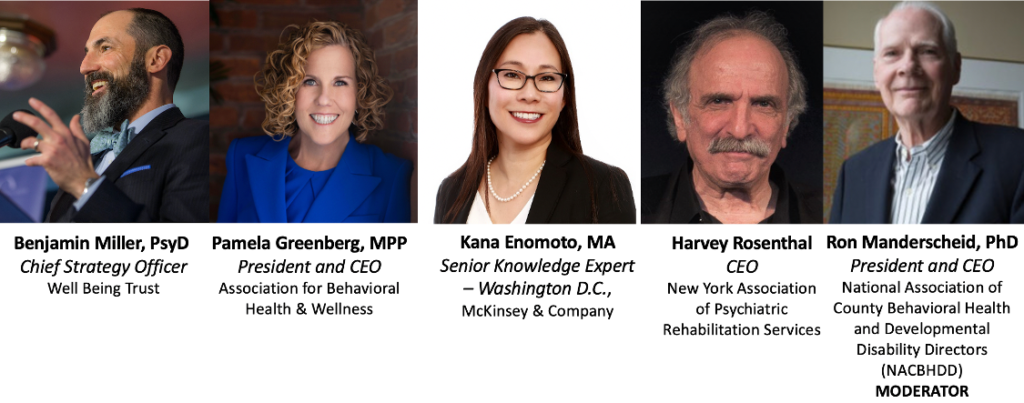
  • Dr. Benjamin F. Miller, Chief Strategy Officer, Well Being Trust
  • Pamela Greenberg, President and CEO, Association for Behavioral Health and Wellness (ABHW)
  • Kana Enomoto, Senior Knowledge Expert – Washington D.C., McKinsey & Company
  • Harvey Rosenthal, CEO, New York Association of Psychiatric Rehabilitation Services (NYAPRS)
  • Dr. Ron Manderscheid (Moderator), President and CEO, National Association of County Behavioral Health and Developmental Disability Directors (NACBHDD)

As a new administration takes their seats and critical positions are appointed, what is fundamentally needed to transform our system? This 90-minute conversation will address the needs of our communities, innovations to improve public health, and priorities we might expect of the new administration.

Resources Shared During Webinar

Panelist Resources

  • Unified Vision for Transforming Mental Health and Substance Use Care 
  • Healing the Nation:  Advancing Mental Health and Addiction Policy
  • Healing the Nation: State Based Solutions for Connecting People to Mental Health Care and  Addiction Recovery Services
  • A Unified Vision for Transforming Mental Health and Substance Use Care   
  • SUPPORTING A NATION IN CRISIS Solutions for Local Leaders to Improve Mental Health and Well-Being During and Post-COVID-19

Resources Shared During Chat

View the Chat Log
  • Bill to be introduced in the Oregon legislature to reduce to barriers to BIPOC mental health providers and increase diversity in the profession
  • AOT Testimony
  • Think Bigger Do Good: Medicaid’s Institutions for Mental Diseases (IMD) Exclusion Rule: A Policy Debate
  • Health Affairs: There Is No “Silver Bullet” For Mental Health: The Problem Of The IMD Exclusion
  • National Shattering Silence Coalition: IMD Position Statement
  • Well Being in the Nation (WIN) Network: WIN Measures
  • Housing Is Mental Health Care: A Call for Medicaid Demonstration Waivers Covering Housing
  • CMS Issues New Roadmap for States to Address the Social Determinants of Health to Improve Outcomes, Lower Costs, Support State Value-Based Care Strategies
  • Think Bigger Do Good Policy Briefs: Housing is Mental Health Care – A Call for Medicaid Demonstration Waivers Covering Housing
  • Providence Health and Services: Providence creates “supportive housing” to help patients live healthier lives
  • Mindful Philanthropy: Informed Giving in Mental Health and Addiction
  • The Center for High Impact Philanthropy: Health in Mind

Panelist Info

Benjamin Miller

Dr. Benjamin F. Miller, PsyD is the Chief Strategy Officer for Well Being Trust, a national foundation committed to advancing the mental, social and spiritual health of the nation. He helps oversee the foundation’s portfolio ensuring alignment across grantees, overall strategy and direction, and connection of the work to advance policy. The end goal is to help advance the national movement around mental health and well-being. Prior to joining Well Being Trust, Dr. Miller spent 8 years as an Associate Professor in the Department of Family Medicine at the University of Colorado School of Medicine where he was the founding Director of Eugene S. Farley, Jr. Health Policy Center. The Farley Center was created in 2014 to be a leader in conducting policy studies, relevant to health and health care challenges, disseminating evidence to those positioned to use it in their decision-making issues related to health policy for the University, and to be a leader locally and nationally on a variety of topic areas. Under Dr. Miller’s leadership, the Farley Health Policy Center worked on four main areas: behavioral health integration, payment reform, workforce, and community-based prevention. He remains a Senior Advisor to the Farley Center. Miller is currently an Adjunct Professor in the Department of Psychiatry and Behavioral Sciences in the Stanford School of Medicine

Dr. Miller has been a principal investigator on several federal grants, foundation grants, and state contracts related to comprehensive primary care and mental health, behavioral health, and substance use integration. He led the Agency for Healthcare Research and Quality’s Academy for Integrating Behavioral and Primary Care project as well as the lead investigator on the Sustaining Healthcare Across Integrated Primary Care Efforts (SHAPE) project. In addition, he was the lead author on the Robert Wood Johnson Foundation Culture of Whole Health report, which provided specific direction to advance mental health nationally.

He received his doctorate in clinical psychology from Spalding University in Louisville, Kentucky. He completed his predoctoral internship at the University of Colorado Health Sciences Center, where he trained in primary care psychology. In addition, Miller worked as a postdoctoral fellow in primary care psychology at the University of Massachusetts Medical School in the Department of Family Medicine and Community Health.

Dr. Miller has written and published extensively on enhancing the evidentiary support for integrated models, increasing the training and education of behavioral health providers in medical settings, and the need to address specific health policy and payment barriers for successful integration. He was the section editor for Health and Policy for Families, Systems and Health and a current member of editorial board for the journal as well as a member of the International Advisory Board of the British Journal of General Practice. Dr. Miller has been a technical expert panelist for CMS on Quality Measure Development for Medicaid Beneficiaries with: Substance Use Disorders; Complex Needs and High Costs; and Physical/Mental Health Integration Needs as well as for the Medicaid Innovation Accelerator Program on integration. Miller is a past President of the Collaborative Family Healthcare Association, a national not-for-profit organization pushing for patient-centered integrated health care, a faculty for the Institute for Healthcare Improvement, and currently a Board Member for Mental Health Colorado. He has received numerous awards for his work on mental health and integration. A highly sought out public speaker, Dr. Miller has presented around the world on the need to better integrate mental health with health care.

Dr. Miller’s research interests include models of integrating mental health and substance use, primary care practice redesign, using practice-based research networks to advance whole person health care, financing health care, and health policy. He has been featured in numerous media outlets including NBC News, USA Today, NPR, PBS News Hour, and many more. Outside of his job, Dr. Miller enjoys playing music, mountain biking, rock climbing, and painting. He and his family live in Denver, Colorado.

Pamela Greenberg

Pamela Greenberg is the President and CEO of the Association for Behavioral Health and Wellness (ABHW). She joined the association in 1998 and since that time has become a nationally recognized leader on managed behavioral health care policy.

ABHW is the leading association working to raise awareness, reduce stigma, and advance federal policy to improve mental health and addiction care. ABHW represents major national and regional health plans who care for more than 200 million people.

Pamela has extensive experience with mental health parity, including testifying before Congress and federal agencies, and Chairing the Coalition for Fairness in Mental Illness Coverage, one of the leading Coalitions that helped develop, advocate for, and get the Wellstone-Domenici Mental Health Parity and Addiction Equity Act of 2008 signed in to law. She also currently serves on the Joint Commission’s Behavioral Health Care Accreditation Advisory Council, URAC’s Health Standards Committee and Parity Advisory Council, and innovaTel Telepsychiatry’s Strategic Advisory Board.

Prior to joining ABHW Pamela was the Deputy Director of Federal Affairs for America’s Health Insurance Plans (AHIP).  Before joining AHIP Ms. Greenberg was a Legislative Assistant at Capitol Associates, a healthcare consulting firm in Washington, D.C.

Pamela has a B.A. from Mount Holyoke College and a Master’s in Public Policy from Georgetown University.

Kana Enomoto

Kana Enomoto is a nationally recognized expert in mental health, substance use, social determinants of health, and trauma.  She is a consultant at McKinsey & Company who specializes in behavioral health, public health, and delivery-system reform. She has more than 20 years of experience as a federal executive in mental health and substance use policy, data, programs, and practice improvement. Kana is an adaptive leader with a strong record of achieving public policy goals, delivering programmatic impact, and inspiring organizational and social change.

Prior to joining McKinsey, Kana Enomoto was Senior Advisor to U.S. Surgeon General VADM Jerome Adams. In this capacity, Ms. Enomoto provided strategic guidance to the Surgeon General’s efforts to combat the opioid epidemic.  Previously, Ms. Enomoto was Acting Administrator for the Substance Abuse and Mental Health Services Administration. Appointed in 2015 by HHS Secretary Sylvia Burwell, Ms. Enomoto provided executive direction and policy leadership for an agency with 600+ employees and a fiscal year budget of over $4 billion.

During the course of her federal career, Ms. Enomoto helped to advance many milestones in the behavioral health field including Facing Addiction in America: The Surgeon General’s Report on Alcohol, Drugs and Health, Mental Health: Culture, Race, and Ethnicity, and Achieving the Promise: Transforming Mental Health Care in America.

Ms. Enomoto has received awards in recognition of her work, including the Arthur S. Flemming Award, the American College of Mental Health Administration King Davis Award, and the Secretary’s Award for Distinguished Service.  Ms. Enomoto earned her bachelor’s degree in psychology and master’s degree in clinical psychology from the University of California, Los Angeles and is a graduate of Harvard University’s Kennedy School of Government, Senior Managers in Government Program.

Harvey Rosenthal

Harvey Rosenthal serves as the CEO of the New York Association of Psychiatric Rehabilitation Services (NYAPRS), a peer-provider partnership that has been a leading state and national change agent over the past 25 years.  

Harvey has over 44 years of experience working to promote public mental health policies and practices that advance the recovery, rehabilitation, rights, dignity and full community inclusion of individuals with mental health and/or trauma related challenges.  

Harvey has helped to create several nationally acclaimed and replicated peer support and transformational training innovations.  He has also worked to fight stigma, discrimination, and human rights violations and to advance informed choice protections, self-directed care and cultural competence. 

Harvey is a recipient of CBHL’s Timothy J. Coakley Award for Behavioral Health Leadership. 

His interest in his work is personal, beginning with a psychiatric hospitalization at age 19.

Ron Manderscheid

Ron Manderscheid, Ph.D., serves as the President and CEO of the National Association of County Behavioral Health and Developmental Disability Directors. The Association represents county and local authorities in Washington, D.C., and provides a national program of technical assistance and support. Concurrently, he is Executive Director of the National Association for Rural Mental Health, Adjunct Professor at the Department of Mental Health, Bloomberg School of Public Health, Johns Hopkins University, and Adjunct Professor, School of Social Work, University of Southern California. Dr. Manderscheid serves on the boards of the Cosmos Club, the Employee Assistance Research Foundation, the Danya Institute, the Council on Quality and Leadership, the NASMHPD Research Institute, and the National Register of Health Service Psychologists. He also serves as the Co-Chair of the Coalition for Whole Health. Previously, he served as the Director of Mental Health and Substance Use Programs at the Global Health Sector of SRA International and in several federal leadership roles at the U.S. Department of Health and Human Services. Throughout his career, he has emphasized and promoted peer and family concerns.

Dr. Manderscheid is a former Member of the Secretary of Health and Human Services Advisory Committee on Healthy People 2020, Past President of the Federal Executive Institute Alumni Association (FEIAA) Foundation, Past President of FEIAA, past Chair of the American Public Health Association (APHA) Mental Health Section and a past member of the APHA Governing Council. He has also served previously as the Chairperson of the Sociological Practice Section of the American Sociological Association, as President of the Washington Academy of Sciences and the District of Columbia Sociological Society, and as President of ACMHA: The College for Behavioral Health Leadership.

Recently, he co-edited a new text, Outcome Measurement in the Human Services: Cross-Cutting Issues and Methods in the Era of Health Reform, and contributed to a second new text, Public Mental Health. Previously, he served as principal editor for eight editions of Mental Health, United States. He has also authored numerous scientific and professional publications on services to persons with mental illness and substance use conditions. He serves on the Editorial Board and prepares a periodic blog for Behavioral Healthcare Executive.

Health Equity Through Partnerships with Community Development Corporations: The other CDC | Webinar

December 3, 2020 by Holly Salazar

Presentation Slides (Slides 1-24)
Presentation Slides (Slides 25-48)

Description

The current pandemic has revealed even more deeply the health inequities that impact our communities, influenced by legacies of racial and economic segregation and disinvestment that fueled disparities in opportunity, health and well-being even before the COVID-19 crisis. The community development industry was originally founded during the civil rights movement, in response to racist “redlining”policies and discriminatory lending practices, and is responsible for investments in health clinics, affordable housing, permanent supportive housing, and more. What is the industry’s role in our current moment, and how can those working to provide for mental and behavioral health, better collaborate to address shared goals?

Objectives:

  1. Understand the role of the community development sector in supporting place-based healthcare investments and maximizing positive impact on community needs.
  2. Access practical tools to identify potential community development partners across the country and resources to advance similar successful cross-sector partnerships

Speaker Info

Ruth Thomas-Squance, PhD, MPH, is Director of Field Building at the Build Healthy Places Network where she develops and implements the organization’s national Field Building Strategy around cross sector health partnerships. A passionate public health change agent, she has 15 years of experience working in multi-sector collaborations with diverse partners to promote health equity.

Renae A. Badruzzaman, MPH, is Program Manager at Build Healthy Places Network where she operationalizes and implements the Network’s place-based strategy. Renae brings a decade of experience working in multidisciplinary and cross-sector collaborations to advance health equity, inclusion and justice for people of color and communities with low-income.

Ashley Hernandez is the Communications and Outreach Specialist for Build Healthy Places Network. She has extensive experience in non-profit work both nationally and globally. She has worked on a range of issues from economic empowerment to Indigenous philanthropy, with the goal of working with communities to build partnerships and create access to resources in order to build more equitable communities.

CBHL 2020 Un-Summit Closing Keynote | Susan Cooper – Moving the Needle: Building Authentic Community Partnerships Together as ONE

November 17, 2020 by Holly Salazar

One Health is a program designed to meet the needs of our uninsured, medically and socially complex patients. The goal of the program is to improve the health of our most vulnerable, while bending the cost curve. Complex patients comprise a small, heterogeneous group of individuals who frequently cycle through multiple systems (healthcare, behavioral, social, correctional), but do not receive any lasting benefit from the interactions. Care is often fragmented and systems are rarely designed to meet the needs of the most complex. Hospitals alone are insufficient to meet the complex needs of these patients. A new mindset for building authentic partnerships was required. The team built authentic relationships with cross-sector community partners based on data and trust. New tools were developed and implemented for community asset mapping, model design, and data collection, which led to the creation of a new ecosystem of care inclusive of healthcare, behavioral health, and social services. Additionally, new methods of cross sector collaboration were introduced. Over the course of 27 months, 430 individuals were enrolled. Improved outcomes were achieved in health, housing, utilization, cost, benefits, food security, and self-sufficiency.

Protected: CBHL 2020 Un-Summit Opening Keynote | Tyler Norris – Creating the Conditions for Health and Well Being

September 28, 2020 by Holly Salazar

This content is password-protected. To view it, please enter the password below.

Disasters and Behavioral Health in Today’s World: Implications for Leadership | Webinar

August 27, 2020 by Holly Salazar

Presentation Slides

Additional Resources:

  • See Presentation Slides for a list of terrific resources!
  • Disaster Behavioral Health Curriculum Guidance by the Center for the Study of Traumatic Stress, Uniformed Services University
  • Congratulations by the way – Some Thoughts on Kindness – by George Saunders – Reviewed by Brian Flynn

Description

Behavioral health leaders are faced with a confluence of mental health disasters –  the COVID-19 pandemic, other natural disasters like hurricanes, an economic crisis, civil and cultural turmoil – all producing a range of effects and challenging our values and ability to respond.  Disaster mental health principles tell us that:

  1. Everyone is impacted in some way, but the impact varies
  2. It is not only about diagnosing disorders
  3. There is a behavioral health role in all phases of the disaster (preparedness, response, and recovery), and
  4. Leadership matters.

Typically, in our healthcare profession, we focus on diagnosing and treating disorders, which make up a great deal of the morbidity and mortality in this and other disasters. However, before diagnosis occurs during a mental health disaster, the public will experience things like distress reactions and engagement in risky behaviors.  These will show up in places like the emergency department or primary care setting, via law enforcement interactions, and at home or at work.  All segments of society are impacted by the significant social and economic cost, creating a significant public behavioral health burden, and underscoring the important role of public behavioral health leadership.

Webinar Objectives

  1. Understand the role of the public behavioral health system during COVID-19 as it relates to patient care, workplace, and partnerships.
  2. Understand the role of the public behavioral health authority during COVID-19 as it relates to leadership, advice and advocacy, reducing barriers to care, and communication.
  3. Review future emerging issues related to the ongoing nature of the pandemic.

Speaker Info

Dr. Joshua C. Morganstein, MD, is Associate Professor and Assistant Chair in the Department of Psychiatry and Assistant Director at the Center for the Study of Traumatic Stress (CSTS) in the Uniformed Services University of the Health Sciences and a Captain in the Commissioned Corps of the U.S. Public Health Service. He is a Chair of the Committee on the Psychiatric Dimensions of Disaster and Distinguished Fellow at the American Psychiatric Association. Dr. Morganstein received his medical degree from the Uniformed Services University of the Health Sciences. He completed a combined residency in Psychiatry and Family Medicine in the National Capital Consortium in Washington, DC. Dr. Morganstein leads the Disaster Mental Health and Public Health education and consultation services at the Center for the Study of Traumatic Stress. In this capacity he has been an invited speaker and consultant for national organizations and federal interagency partners.

Dr. Morganstein provided mental health subject-matter expertise to the United Nations’ 2015 Sendai Framework for Disaster Risk Reduction. He co-authored the first Curriculum Recommendations for Disaster Behavioral Health Professionals and was a co-author for a landmark Presidential report on the Impact of Climate Change on Human Health in the United States. Dr. Morganstein authored numerous articles, chapters, and technical reports on the mental health impact of various disaster events, including climate-related disasters, mass violence, terrorism, pandemics, and nuclear exposure. He is Assistant Editor for the second edition of the Textbook of Disaster Psychiatry. Dr. Morganstein has studied the effects of stress and trauma in organizational settings, including recent work with military drone intelligence community, personnel impacted by the 2013 mass shootings at the Washington Navy Yard, and is currently working with the United States National Guard to better understand risk and protective factors associated of COVID-19 deployments on the psychological health and operational readiness of service members.

Brian W.Flynn, EdD is Associate Director of Health Systems in the Center for the Study of Traumatic Stress, Adjunct Professor of Psychiatry, Department of Psychiatry, Uniformed Services University. A major focus of his work is consulting, writing, training, and speaking on the topics of preparation for, response to, and recovery from, the psychosocial aspects of large-scale emergencies and disasters. In addition, he provides CSTS leadership in the areas of behavioral health policy and systems development and integration. Prior to joining USU, he served as a Rear Admiral/Assistant Surgeon General in the United States Public Health Service (USPHS). He has directly operated, and supervised the operation of, the Federal Government’s domestic disaster mental health program (including terrorism), programs in suicide and youth violence prevention, child trauma, refugee mental health, women’s and minority mental health concerns, and rural mental health.

Dr. Flynn has served as an advisor to many federal departments and agencies, states, and national professional organizations. He is recognized internationally for his expertise in large-scale trauma and has served as an advisor to practitioners, academicians, and government officials in many nations. He received his BA from North Carolina Wesleyan College, his MA in Clinical Psychology from East Carolina University, and his EdD in Mental Health Administration from the University of Massachusetts at Amherst.

Tim DeWeese is the Director of Johnson County Mental Health Center.  The Mental Health Center is a department of Johnson County (KS) Government and employs more than 340 staff who provide behavioral health services to nearly 10,000 county residents annually.  Tim possesses a Bachelor of Science degree in Psychology from Missouri Southern State University and a Master of Social Work Administration degree from the University of Kansas.  He is a Licensed Mental Health Professional in Kansas and has over 30 years of experience in community mental health, where he has worked in various capacities. He possesses extensive knowledge and experience in the public mental health delivery system, client-centered leadership, and program design/development.  Tim also served more than 10 years as a commissioned officer in the Army Reserve and National Guard.

A Call to Action – Our Responsibility as Leaders to Address Structural Racism and Resulting Health Inequities | Webinar

July 29, 2020 by Holly Salazar

Download the Presentation Slides

Additional Resources:

  • The Dawn of System Leadership by Peter Senge, Hal Hamilton, & John Kania (Stanford Social Innovation Review)
  • The Cascading Curves of Poverty of COVID-19 by Dr. Larissa Estes
  • White Fragility by Dr. Robin DiAngelo
  • Post Traumatic Slave Syndrome by Dr. Joy DeGruy

Description:

COVID-19 does not affect everyone equally. Public health crises by their nature reveal existing inequities and make them worse. This is especially true among Black, Indigenous and People of Color who are disproportionately harmed by institutionalized policies and practices that knowingly and unknowingly perpetuate racism and discrimination – creating disparities and poverty. Generations of historically traumatic events have a profound impact on a community’s health, increasing vulnerability to behavioral and other complex health needs.

Now several months into the COVID-19 crisis, what does this look like on the ground from the eyes of our disenfranchised communities? How has this pandemic exposed and exacerbated existing inequities? As leaders, we must be prepared to have difficult conversations about structural racism and resulting inequities and be willing to develop collaborative strategies to address.

Learning Objectives:

  1. Participants will be able to identify and classify inequities experienced from the lens of the communities or populations they serve.
  2. Participants will understand the impacts of inequities on populations with behavioral and other complex health needs.
  3. Participants will be able to articulate concrete examples of ways in which as leaders, they can address inequities occurring at each level of the social ecological model.

Speaker Information:

Jei Africa, PsyD, MSCP, Director of Marin County Behavioral Health and Recovery Services

Dr. Jei Africa is the Director of Behavioral Health and Recovery Services at the County of Marin. He is an innovative thought leader and clinician who is passionate about integrating effective culturally responsive practices into the core functioning of County health services. Dr. Africa has over two decades experience in the areas of behavioral health, trauma, health equity and diversity. He also maintains a consulting and private psychotherapy practice in the Bay area.

Dr. Larissa J. Estes, DrPH, Executive Director, ALL IN Alameda County

Dr. Larissa J. Estes is the Executive Director of ALL IN Alameda County. ALL IN was launched in 2014 by County Supervisor Wilma Chan to address issues of poverty in response to growing inequality. Dr. Estes has over 20 years of experience in allied health, healthcare, and public health with a focus on community and equity and is interested in integrating evidence-informed strategies into policy and practice across sectors that impact community health and wellbeing.

  • « Go to Previous Page
  • Page 1
  • Interim pages omitted …
  • Page 3
  • Page 4
  • Page 5
  • Page 6
  • Page 7
  • Page 8
  • Go to Next Page »

Footer

Contact Us

info@leaders4health.org
9 Meriam St., Suite 4
Lexington, MA 02420

Connect with Us

  • LinkedIn

Join Our Mailing List

Key Links

  • Membership
  • Resources
  • About

Copyright © 2026 · The College for Behavioral Health Leadership · All Rights Reserved · Website by Tomatillo Design